
Cut-Edge Corrosion Treatment
Rusting sheet edges on metal roofs and cladding — ground back to sound metal, treated, sealed and recoated before the corrosion spreads. UK-wide.
Free site survey and written report. No obligation.
What it looks like
Cut edge corrosion, caught and treated
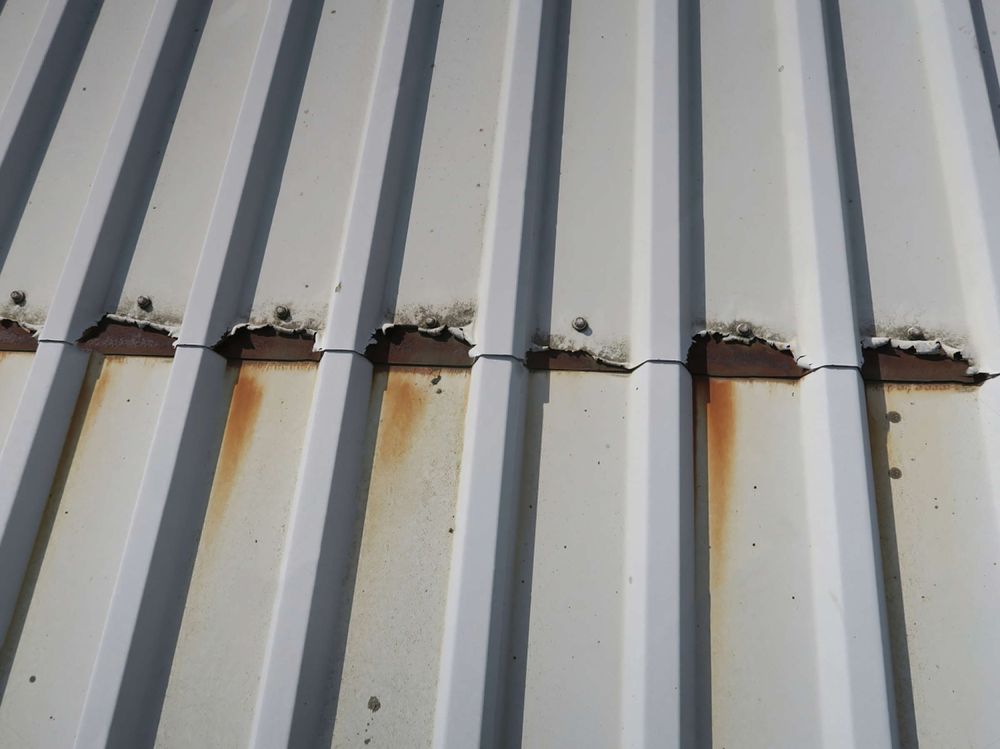
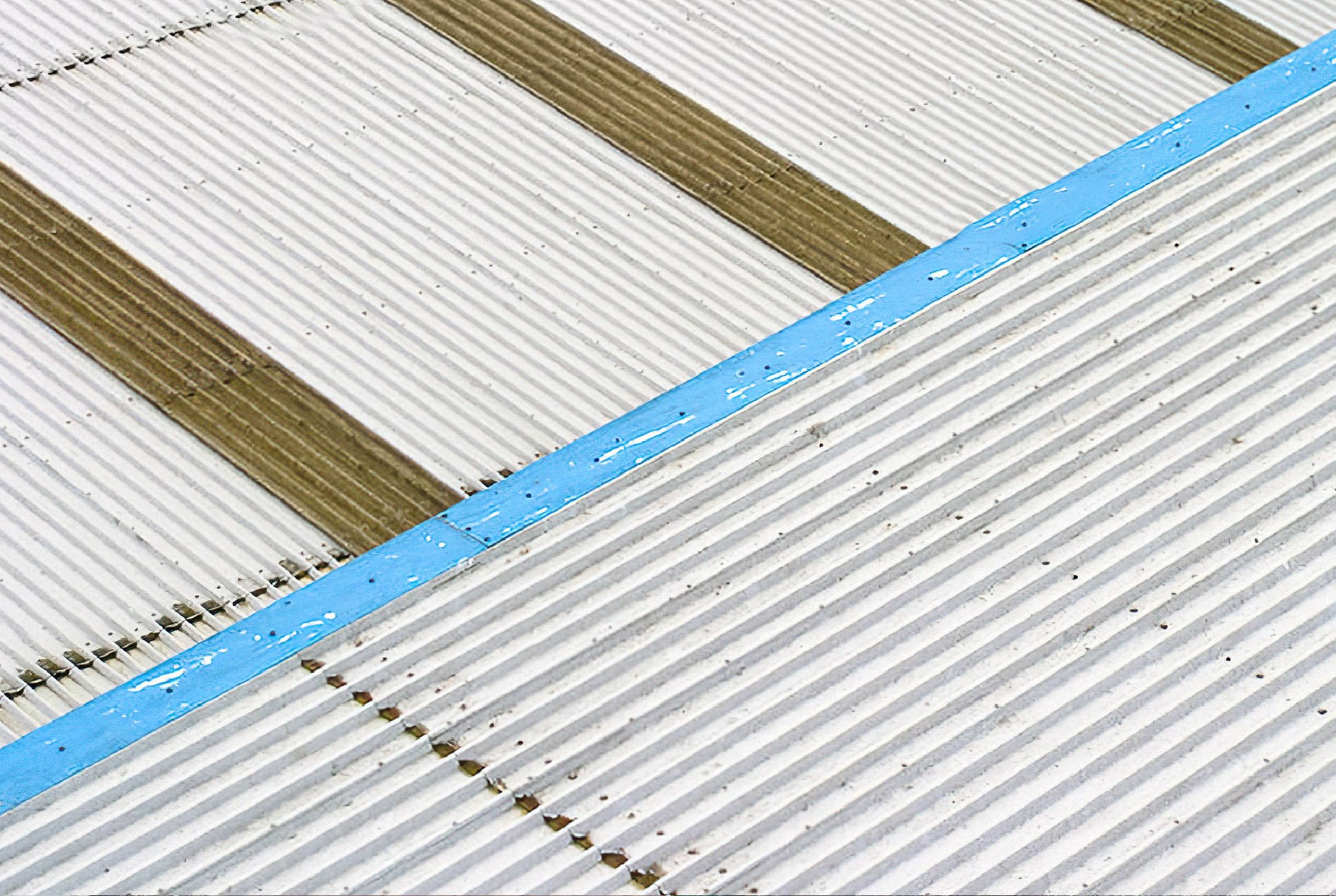
The tell-tale rust line at the sheet edge — and the treatment going on.
The problem
Rust starting at the sheet edges
Cut-edge corrosion affects profiled metal roofing and cladding at the points where the sheets were cut — the laps, the eaves and the sheet ends. The cut leaves the steel unprotected, rust takes hold there first, and it works its way inward from the edge into the body of the sheet.
If you want the full background — why the edges fail when the rest of the sheet is fine, and what the early signs look like — we have written a plain-English explainer: what is cut-edge corrosion?
This page is about the fix: how the treatment is actually done, what happens if it is left, and when a sheet is past treating.
The treatment
How cut-edge corrosion treatment is done
Four stages, in order. Skipping any of them is how a treated roof fails early.
1. Grind back to sound metal
The corroded edge is mechanically prepared — loose rust, scale and failed coating are taken off until we are back to metal that will hold a coating. Rust that is painted over rather than removed carries on corroding underneath the new finish.
2. Treat the prepared edge
A corrosion-inhibiting primer goes onto the cleaned edge to stop the rust restarting before the sheet is sealed and coated.
3. Seal the edge
The laps and sheet ends are sealed so water can no longer sit against the cut edge — which is what caused the problem in the first place. This is the stage that makes the repair last rather than return.
4. Recoat
The protective topcoat is applied by airless spray — either to the treated edges alone or across the full roof or elevation, depending on the condition of the rest of the coating. Colour-matched, so the repair does not read as a patch.
Which of those the building needs — edge treatment alone, or edge treatment as part of a full recoat — comes out of the survey. The finished work carries a coating guarantee of up to 20 years, confirmed in writing with the quote.
Not sure how far the corrosion has gone?
Send us photographs of the sheet edges, or book the free survey and we will tell you what can be treated and what cannot.
Left untreated
What happens if cut-edge corrosion is left
Cut-edge corrosion does not stay at the edge. Untreated, the rust creeps from the cut into the body of the sheet, the metal thins and weakens, and the laps stop keeping water out — which is when leaks start showing up inside the building.
The cost follows the same curve. Caught early, this is a treatment job: grind, treat, seal, recoat. Caught late, sheets have rusted through and have to be replaced — a far more expensive and disruptive job than coating, because replacement means opening up the roof over a building that is probably still in use.
That is the honest case for dealing with it in this year’s maintenance budget rather than the next one.
Early: edge staining
Rust streaks at laps and sheet ends. The cheapest point to treat.
Advanced: spreading and lifting
Corrosion moves into the sheet and the coating peels back from the edge. Still treatable, more preparation.
Late: rusted through
The edge is perforated. No coating restores lost steel — those sheets need replacing.
The survey
When a roof sheet is beyond treatment
Treatment works while there is sound metal left to work with. Once an edge has rusted through — perforated, or thinned to the point it no longer holds a fixing — no coating can bring the steel back, and treating around it wastes the money spent on the rest.
That judgement is what the free survey is for. We inspect the sheet edges, laps and fixings and put it in writing: which areas can be treated, which sheets are past it and need replacing first, and what the coating specification should be for everything else. You get a fixed-price quote against that report, not an estimate against a guess.
Cut-edge treatment is then kept honest by the same rule as every coating we apply: the preparation is most of the job, and regular inspection afterwards is what keeps a treated roof out of trouble.
Related work
Work that often goes with it
Cut-edge treatment is usually found on a survey rather than asked for by name. These are the jobs it most often sits alongside.
Where the edges are treated as part of recoating the whole elevation, so the building is done once.
Where corrosion or coating failure is too far gone for hand preparation and the surface needs taking right back.
The buildings where cut-edge corrosion shows up most — large profiled roofs and elevations, worked around the operation.
Compliance
Accreditations, RAMS and insurance
Everything your procurement team asks for, in writing, before we get on site.
USP Coatings is CHAS accredited and every operative holds a valid CSCS card. We carry £10 million public liability insurance and send the certificate with the quote. Full risk assessments and method statements — RAMS — are issued for approval before any work begins, on every project, without being asked.
 CHASHealth and safety pre-qualification
 CSCSCarded operatives on every site
 IPAFPowered access, MEWPs
 PASMAMobile access towers
 CITBRegistered training and skills
FAQs
Cut-edge corrosion treatment FAQs
What is cut-edge corrosion?
Rust that starts at the cut ends and laps of profiled metal roof and cladding sheets, where the steel was left exposed when the sheet was cut. We have a full plain-English explainer: what is cut-edge corrosion?
How is cut-edge corrosion treated?
Four stages: the corroded edge is ground back to sound metal, treated with a corrosion-inhibiting primer, sealed at the laps and sheet ends so water can no longer sit against the cut, then recoated by airless spray.
Can it be fixed without replacing the roof sheets?
Usually, yes — if it is caught before the edges rust through. Treatment costs a fraction of sheet replacement. Once an edge is perforated, that sheet has to be replaced; the free survey tells you in writing which areas can be treated and which cannot.
What happens if cut-edge corrosion is left untreated?
The rust spreads from the edge into the body of the sheet, the metal weakens, and the laps start letting water in. What begins as a treatment job becomes leaks, then sheet replacement — a far more expensive and disruptive repair.
What guarantee do you offer on the treatment?
A coating guarantee of up to 20 years, confirmed in writing with the quote.
Do you work on buildings that stay open?
Yes. The work is external and zones are contained, so the building keeps operating. RAMS are issued for approval before any work begins, on every project.
Where we work
We are a national contractor and we go to the building. Cut-edge corrosion treatment teams work across England, Scotland and Wales, from a single unit to a multi-site estate. Head office is in Bradford. Send us the postcode and we will confirm survey availability.
Next step
Book a free site survey
We inspect the sheet edges, laps and fixings, and send a written report with a fixed-price quote — what can be treated, what cannot, and what it will cost. No charge, no obligation.
- Survey and written edge-condition report, free
- Fixed-price quote and coating specification
- RAMS and insurance certificate supplied with it
Prefer to talk it through first? Call 01134 364 364 or email letstalk@uspcoatings.co.uk.