
Shot Blasting
Mobile shot blasting for commercial and industrial buildings — rust, failed coatings and contamination stripped back to a clean, sound surface, ready for recoating. UK-wide.
Free site survey and written report. No obligation.
The work in practice
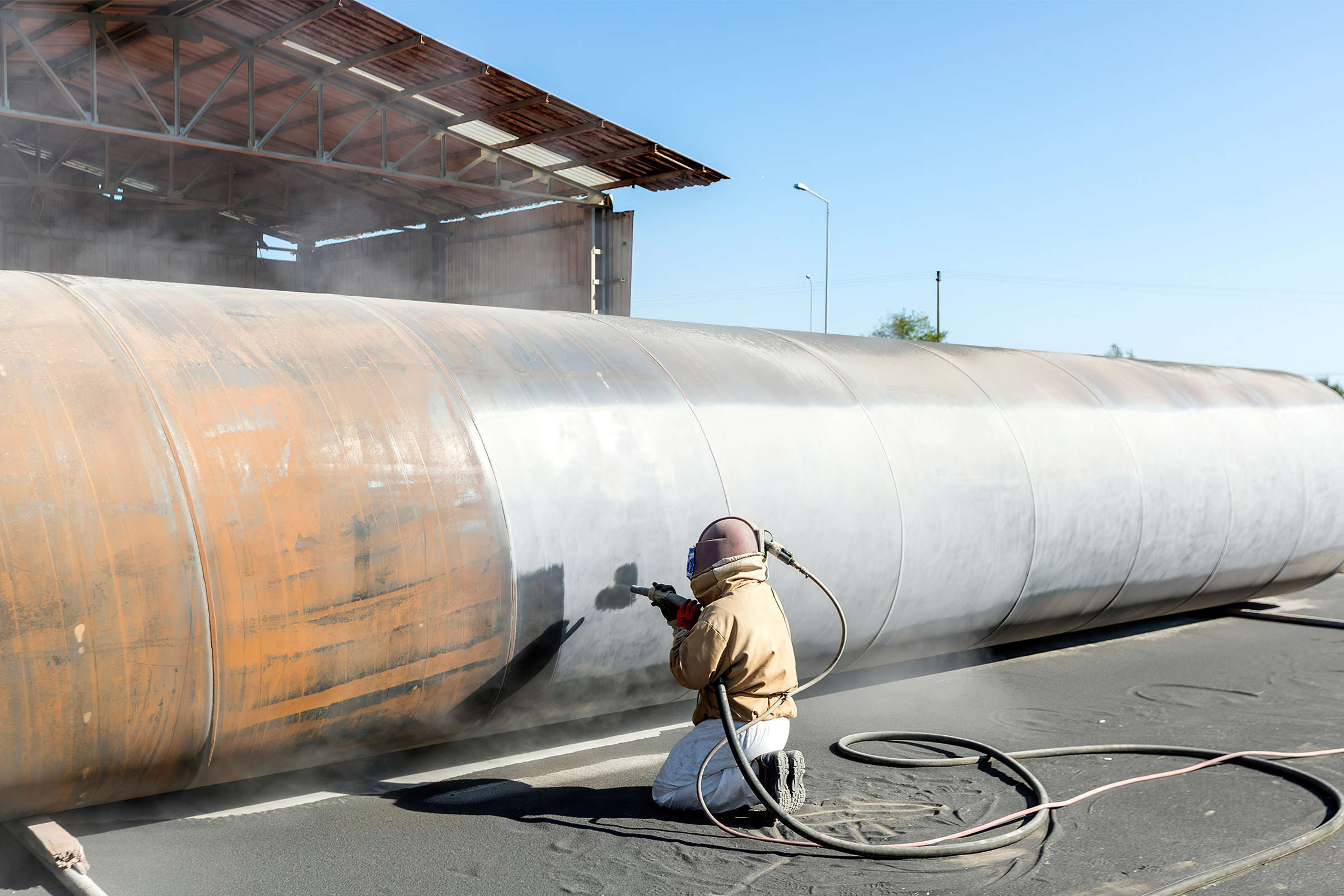
Blasting in progress
Corrosion and failed coatings stripped back to a sound surface.
The work
What shot blasting does
Shot blasting propels abrasive at a surface under high pressure and takes it back to what is actually underneath — bright metal on steel, a sound and stable substrate on concrete. Rust, failed paint, old coatings, grease, oil and built-up contamination come off in one process.
It is preparation, not a finish. Nothing is applied during blasting; the value is the surface it leaves behind — clean, keyed and able to hold a new coating properly. A coating bonds only as well as the surface it sits on, which is why the blast comes first and the spraying comes after.
We use it on steel, other metals and concrete: structural steelwork, cladding, plant and industrial surfaces, and smaller batches of parts where a whole structure is not involved.
The decision
When a surface needs blasting before coating
Most recoating work does not need it. Where the existing coating is sound, degreasing, abrading and treating isolated corrosion is enough, and blasting would be money spent for nothing.
Blasting earns its place when the surface has gone past that point: corrosion established underneath the coating, layers that are failing or lifting, or contamination a new system cannot bond through. Spraying over any of those wastes the new coating — it can only hold as well as what is under it.
The survey settles it. We inspect the condition of what is on there now and tell you plainly whether the job needs a blast back or lighter preparation will do.
Corrosion under the coating
Rust that has taken hold beneath the surface is removed, not sealed in.
Failed or lifting layers
Old paint and coatings that no longer hold are stripped rather than overcoated.
Damaged concrete
Deteriorated material is taken off to reveal a clean, stable surface that can be repaired.
Keying a surface
Blasting can roughen a surface to give the next treatment something to grip.
Not sure whether the surface needs blasting or lighter preparation?
Send us photographs, or book the free survey, and we will tell you which it needs.
What comes next
Blasting is stage one — the coating is why it happens
Almost every blast we carry out is preparation for one of our own coating services. One contractor, one survey, one specification covering both stages.
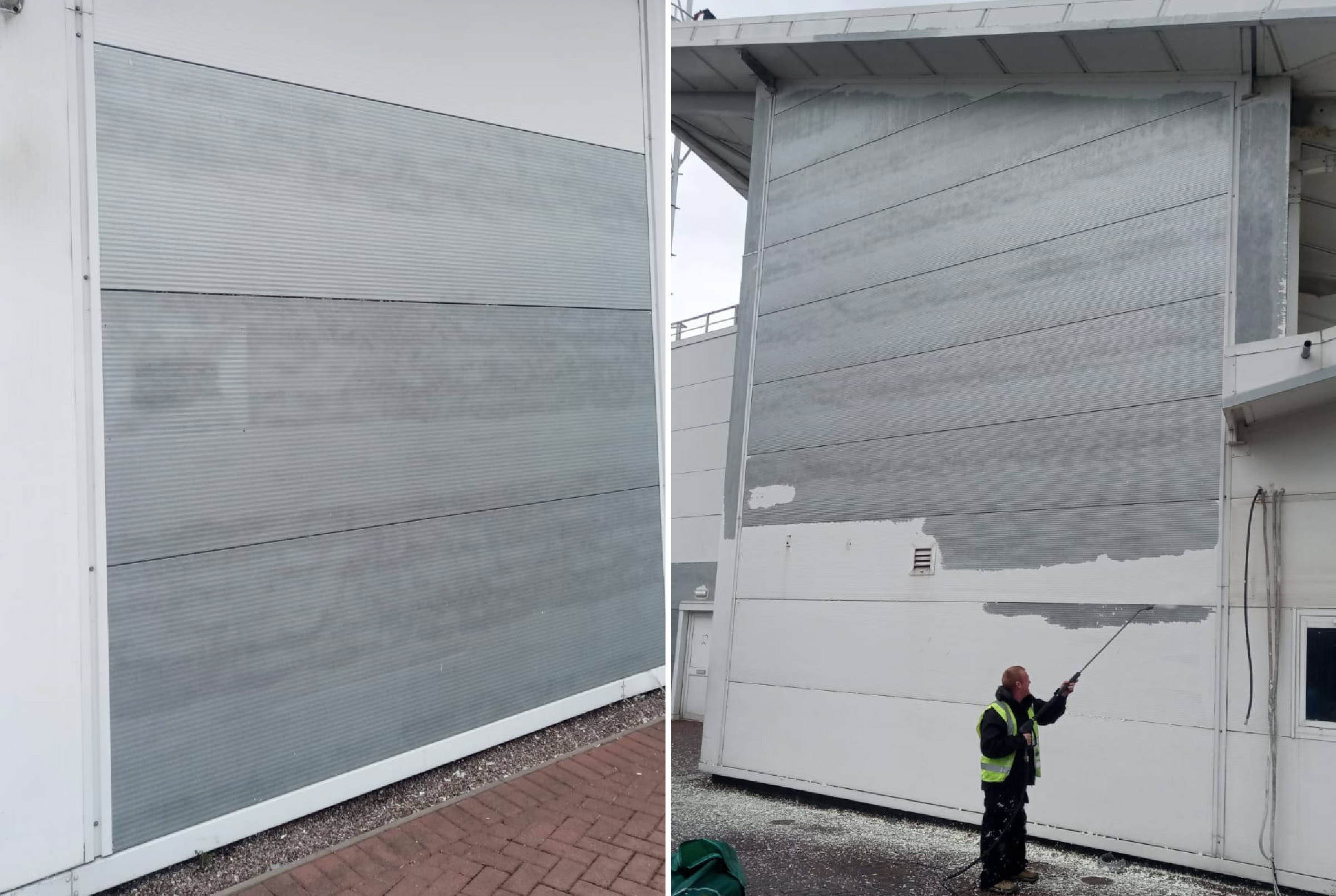
Where panels have corroded beyond spot treatment, the affected areas are blasted back before the new coating system goes on.
Rusted sheet edges and laps are taken back to clean metal so the edge treatment bonds to sound steel, not to rust.
Structural steelwork and industrial surfaces prepared by blast, then recoated as part of the same programme of work.
Splitting the two stages between contractors is where recoating projects go wrong — if the coating fails, each blames the other’s work. When we blast and spray, the preparation and the finish are specified together and the responsibility sits in one place.
On site
A mobile service — we come to the surface
Buildings and structural steel do not travel, so the blasting equipment does. Our teams carry out shot blasting on site, from a large industrial structure to a small batch of parts, with the work area contained and everything around it masked and protected.
Because it is the same company doing the coating, the blast is programmed as the first stage of the job rather than a separate visit: surfaces are blasted, checked and coated in sequence, so cleaned steel is not left standing bare and re-rusting while another contractor is booked.
Compliance
Accreditations, RAMS and insurance
Everything your procurement team asks for, in writing, before we get on site.
USP Coatings is CHAS accredited and every operative holds a valid CSCS card. We carry £10 million public liability insurance and send the certificate with the quote. Full risk assessments and method statements — RAMS — are issued for approval before any work begins, on every project, without being asked.
 CHASHealth and safety pre-qualification
 CSCSCarded operatives on every site
 IPAFPowered access, MEWPs
 PASMAMobile access towers
 CITBRegistered training and skills
FAQs
Shot blasting FAQs
What is shot blasting?
A surface preparation process that propels abrasive material at high pressure onto a surface. It strips rust, old paint and coatings, grease, oil and other contamination, leaving a clean surface for new coatings to bond to.
Why does a surface need blasting before coating?
A coating holds only as well as the surface underneath it. Where corrosion has taken hold or old layers are failing, spraying over the top wastes the new coating — blasting removes the problem instead of sealing it in.
Does every recoating job need shot blasting?
No. Where the existing coating is sound, degreasing, abrading and treating isolated corrosion is enough. The free survey tells you which your building needs before anything is priced.
Can you shot blast on site?
Yes — it is a mobile service. We bring the equipment to the building or structure, contain the work area and protect everything around it. Smaller batches of parts can also be blasted.
Which surfaces can be shot blasted?
Steel and other metals, and concrete — structural steelwork, cladding, industrial surfaces and plant. On concrete, blasting also removes damaged material to leave a stable surface that can be repaired.
Do you apply the coating as well?
Yes, and that is the point of the service. We blast and coat as one programme of work, so the preparation and the finish are specified together and cleaned steel is never left standing bare.
Where we work
We are a national contractor and the blasting equipment travels to the site. Mobile teams work across England, Scotland and Wales, from a single structure to a multi-site programme. Head office is in Bradford. Send us the postcode and we will confirm survey availability.
Next step
Book a free site survey
We come to the site, assess the condition of the surface, and send a written report with a fixed-price quote — covering the blasting and the coating that follows it. No charge, no obligation.
- Survey and written condition report, free
- A plain answer: blast back, or lighter preparation
- One fixed-price quote for preparation and coating together
- RAMS and insurance certificate supplied with it
Prefer to talk it through first? Call 01134 364 364 or email letstalk@uspcoatings.co.uk.